art· ·3 min read
Semionauts in latent space: Covert Design case study
Finding authorship inside an image generator's endless output.
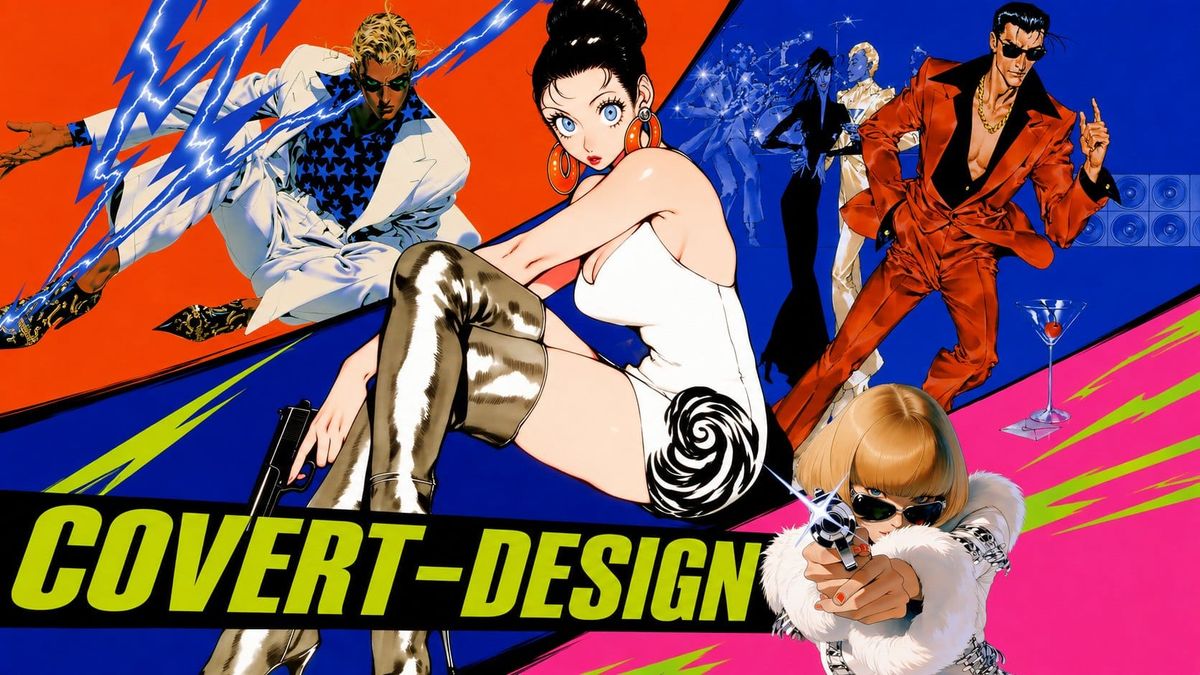
Originally posted on Reddit and X.
I recently started working at Midjourney, in marketing operations. It's the first time in a looong time that I've had a job that wasn't primarily writing... but I can have a little writing as a treat, right?
Last week I interviewed Midjourney creator /u/Sapere_aude_69 (Brandon) about his creative process, to learn how he employs AI as a medium for self-expression and storytelling. It was a thought-provoking conversation and I want to share my takeaways.
First, this quote from Midjourney founder David Holz (in 2022!) resonates with me, and I think it's relevant:
What does it mean for a human to imagine through a computer, as they would travel through a car?
And if people somehow interact together, in the process of imagining things, if we have these co-imaginative spaces, what is it like to create these shared imaginative environments that are somehow intermediated by machines?
Brandon's artistic practice developing Covert Design, with Midjourney as his primary visual tool, poses an answer to those questions.
For starters, the project name was inspired by a Reddit comment. Someone mentioned the game Covert Action (1990). Brandon wasn't familiar, but he liked the comparison. The term "covert" felt perfect for his 007-esque subject matter, so he tweaked that reference to get his project title.
Anyone who frequents the Midjourney subreddit will recognize the signature aesthetic of Covert Design. Brandon's posts are dispatches from a flashy dreamworld reached by stacking up moodboards, style references, and image prompts. Alongside a detailed text prompt (composed with an assist from ChatGPT) and profile personalization. Basically, every option Midjourney gives you for guiding results, Brandon pushes to the maximum.
He appreciates that people often clock his homage to '80s legend Patrick Nagel, a key influence: "They're doing the extra legwork for me, to spread the word." Brandon blends Nagel's stark glamor and exaggerated silhouettes with retro manga, spy-thriller adrenaline, and midcentury magazines. (Also, though you wouldn't guess just by looking, The Count of Monte Cristo.)
Every installment of Covert Design is paired with a song, the name of which usually headlines the sequence of images. When I asked Brandon if he keeps a to-do list of ideas: "That's called my Spotify playlist."
This is David's "shared imaginative environment" in action, pulling our collective cultural archive into the accelerating future. The raw material flows through Brandon to be transformed into something familiar but new. I think familiar but new is what makes Covert Design so compelling.
Perusing the Midjourney subreddit, I found myself entranced by the dramatic visual world that Brandon has summoned into being. "I know it's you even if the first image is far from your usual visual style,” /u/Quarmat commented. "That's quite an achievement in this era of info floods," and yeah, it really is.
The distinctiveness and consistency are what grabbed me. Brandon uses the endless iterative abundance of Midjourney to embody a particular vision and message.
That's the trick with AI art, finding a specific signal amidst the noise of endless texture and form. Honing, curating, and editing down the deluge. That is where authorship and artistry come in when using an image generator.
In the introduction to his 2002 book Postproduction, French theorist and curator Nicolas Bourriaud asked, "how can we produce singularity and meaning from this chaotic mass of objects, names, and references that constitutes our daily life?" Bourriaud wrote:
The activities of DJs, Web surfers, and postproduction artists imply a similar configuration of knowledge, which is characterized by the invention of paths through culture. All three are 'semionauts' who produce original pathways through signs. Every work is issued from a script that the artist projects onto culture, considered the framework of a narrative that in turn projects new possible scripts, endlessly.
"In this new form of culture," he explained, "which one might call a culture of use or a culture of activity, the artwork functions as the temporary terminal of a network of interconnected elements, like a narrative that extends and reinterprets preceding narratives."
"What if artistic creation today could be compared to a collective sport," Bourriaud mused, "far from the classical mythology of the solitary effort?" Doesn't that sound just like what David wondered, 20 years further into the Internet Age, at the dawn of our scintillating AI moment?
Familiar. But new.