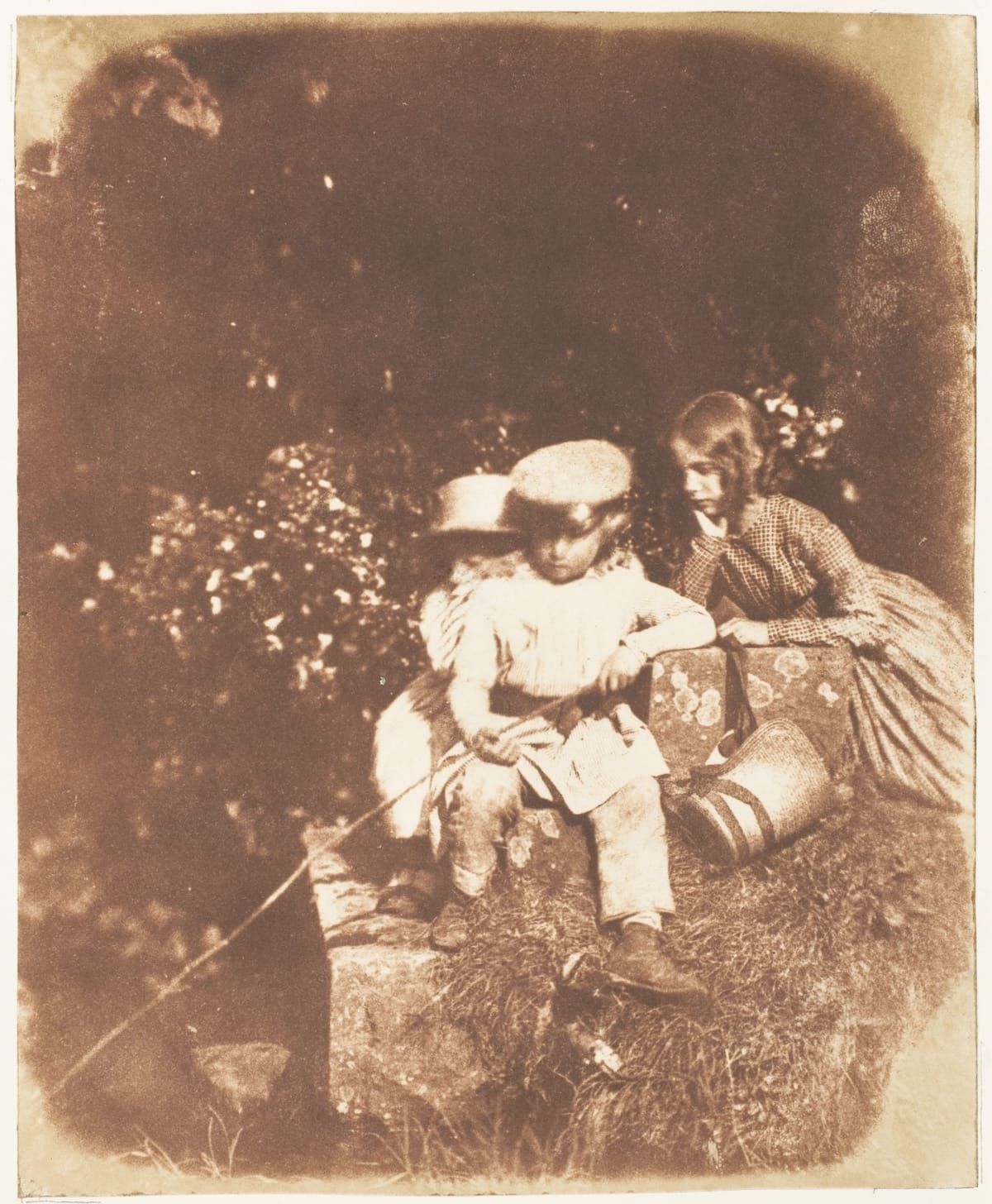
I tend to live in my head. So it is striking to me how physical children are. I sleep in between my two boys, and most nights they squish me into a mama sandwich until I can hardly turn over. They nuzzle, they burrow. They push and pounce.
My baby just started walking, and he is suffused with the delight of it, all up and down his chubby little self. Oh, to be one year old and so victorious! He is more reminiscent of a puppy than an adult human, the way he tumbles into my lap and gives slobbery open-mouth kisses.
But that impression is changing. He points and says "gah!" (what is it? or maybe explain!) and emphatically signs "all done" to leave his high chair.
My three-year-old has entered the life of the mind. It grips him loosely, but it does grip him. He refers to himself as "the fire truck" and corrects anyone who does otherwise. Running laps through the living room, he extends one hand in front of himself and rotates it rapidly, because that is his spinning light, you see. (Some fire trucks have this feature.)
My son has discovered fantasy. He knows the malleability of the self. His physical form can serve his metaphysical desires — because he has metaphysical desires. He reminds me of Italian Futurism, with his tendency toward the headlong rush and instinctive worship of that industrial triumph, the motorized vehicle.
My thoughts above were prompted by this astute post about media and technological change:
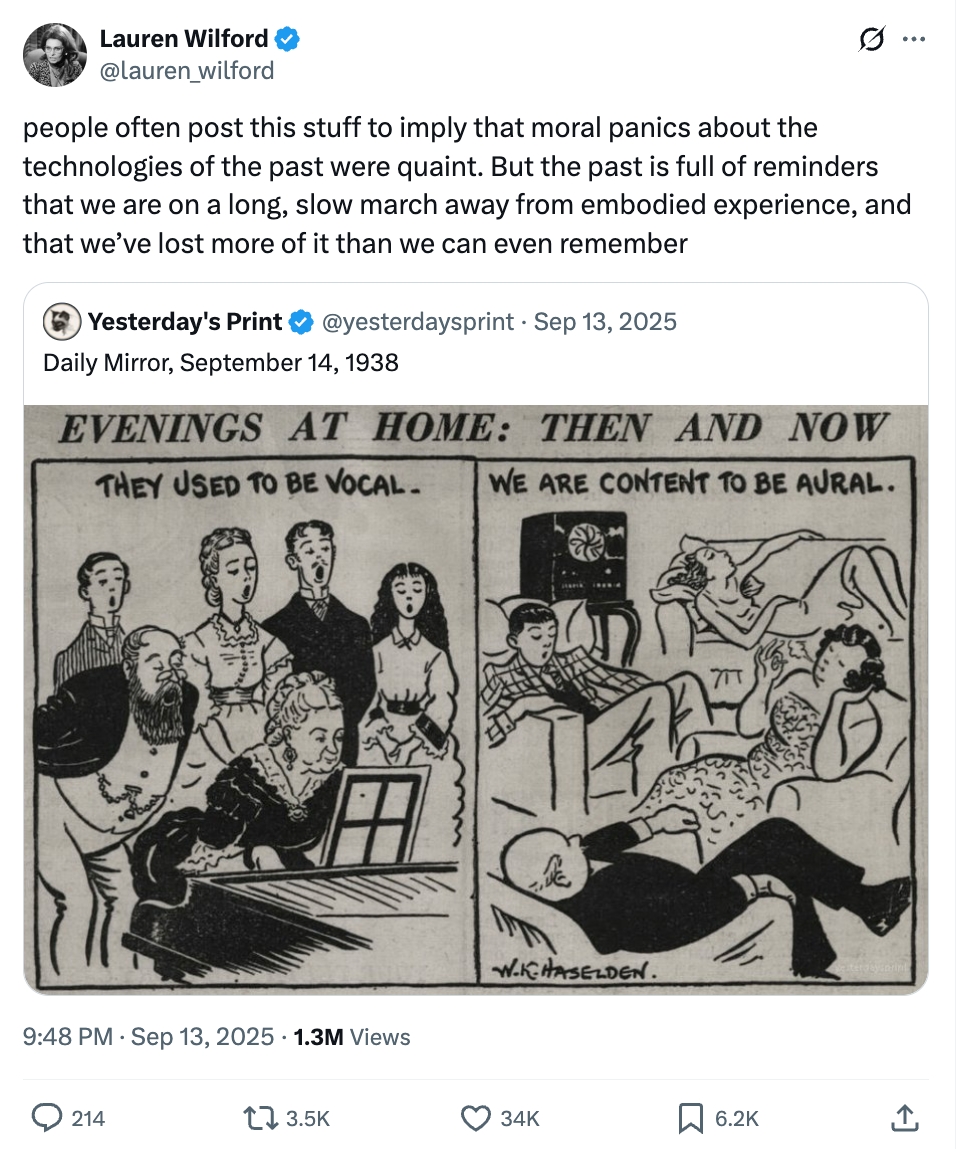
In a word, abstraction. Music leaves the throat, merely inhabiting the head. Like my adult ambitions, which are only dreamed, and consumed mimetically; versus my son's, which he performs.
Semiosis [...] is any form of activity, conduct, or process that involves signs, including the production of meaning. A sign is anything that communicates a meaning, that is not the sign itself, to the interpreter of the sign. [Wikipedia]
Symbolism, writ large, is the human superpower. We can externalize knowledge. This is remarkable. In fact, externalized knowledge is what language is: sounds that mean something, pictures that mean something. Abstraction! And representation: drawings on the cave wall, both prehistoric Lascaux and Plato's allegory.
The distinguishing mark of humanity is not our use of tools (now extensively evident). What sets us apart is having an intersubjective category called "tool" and dwelling on our relationship to it. Reality is mediated, and we figured out that we can mediate it for ourselves. For this Eve gained the pain of childbirth, and Prometheus lost his liver.
To calculate the trajectory of a spear, to imagine it lodged between the ribs of a mammoth, you must first invent the universe.
I was already mulling this over, but I decided to blog after reading a recent Visa essay:
[...] all human perception does have a funhouse mirror quality to it. We hardly ever perceive anything for what it is. Many have written about this. There's a bit in Huxley's Doors of Perception where he talks about how, for adults, the 'sensum' ('sense datum', or raw experience) is immediately subordinated to the concept, as contrasted with the perceptual innocence of childhood, where you don't presume to know what you're seeing.
That representations of reality can activate our minds is what makes humans so effective at modifying our environments. Also, so easy to hijack for others' purposes. Wireheading — self-pleasure via simulation, substituting for direct experience — is an inevitable consequence of our cognitive structure.
I can represent reality in my mind, and acting on the mental representation acts on the mind, which interprets this effect as reality. This is why controlling who perceives what is such a contentious business.
Big Fire Truck has a lot to answer for...
Relevant reading:
- "The evolution of stories: from mimesis to language, from fact to fiction" by Brian Boyd (which I've actually discussed before, albeit in one of my worst posts ever)
- "Ignorance, a skilled practice" by @literalbanana